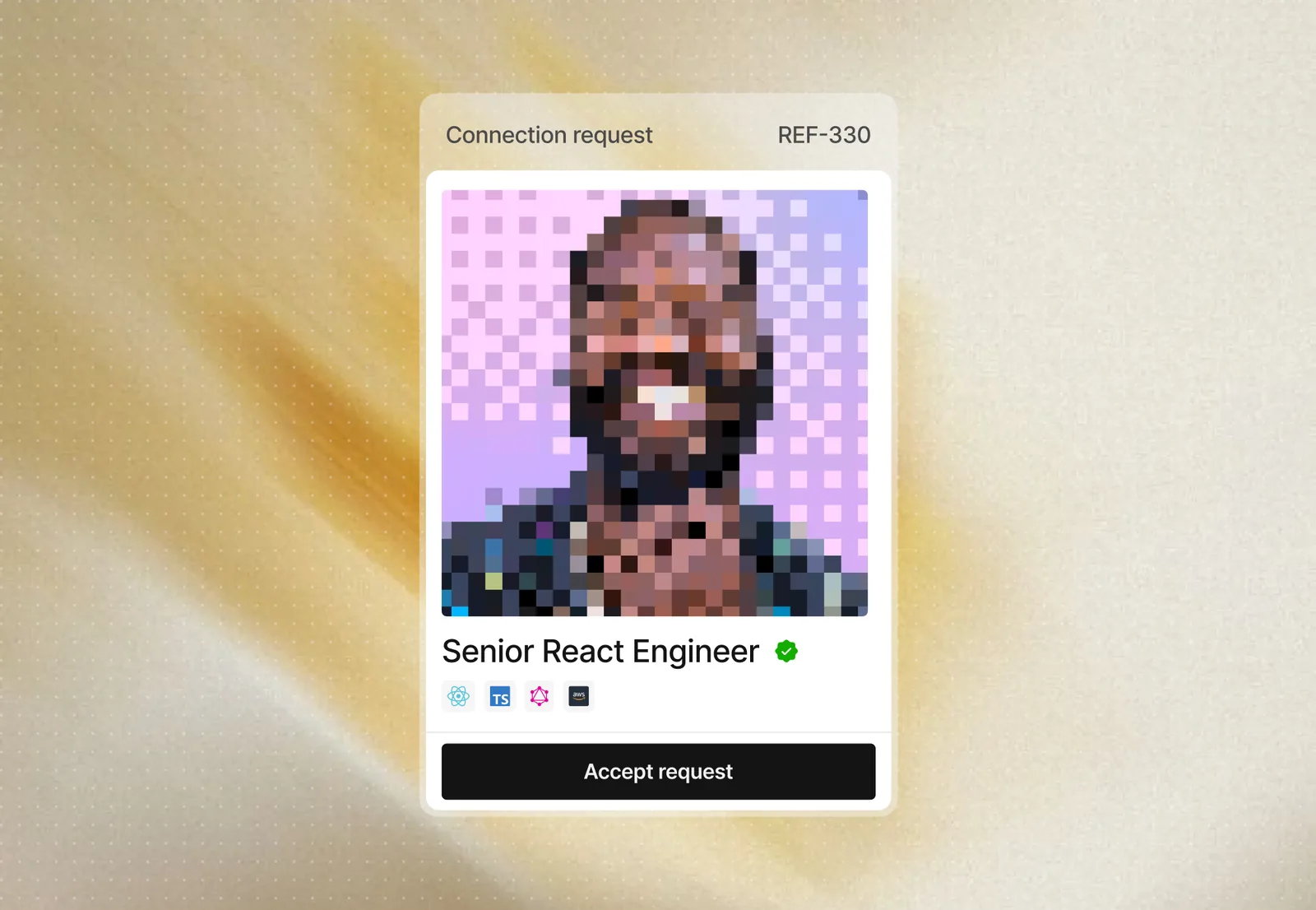
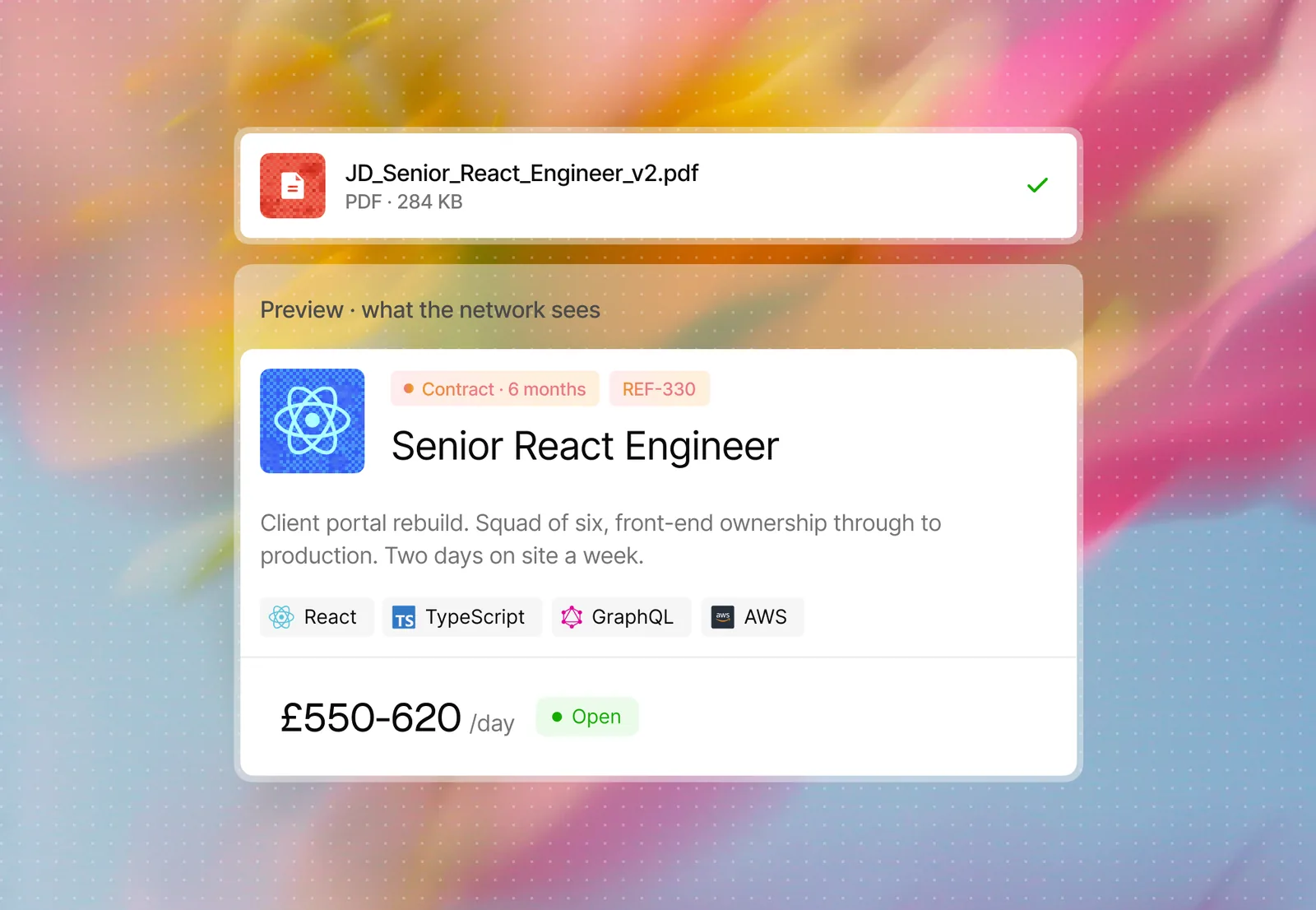
Overview
Plenty of AI agents can now answer a coach's DMs and book calls. Zenask's also read every conversation to find what the market wants and what the offers are missing.
Zenask's agents answer prospects on Instagram, WhatsApp and Messenger, book calls with the coach's closers and sell in the chat. They also bring back what each conversation says about the business. The product had to show, in seconds, what the agents did, what they learned and what to change.
I took Zenask from Notion briefs, which listed each feature, the problem it solved and the back end behind it. I did the strategy and visual positioning, the UX of every flow, the brand, and a working prototype in code for the developer, then wrote the tickets and followed the build.
The problem
Founders had to live in their DMs. When AI took over, they still had to open every app to see what it did.
Info-product sellers close in their DMs, and a lead answered late is a lead lost, so founders spent their days in Instagram instead of on their business. When Zenask started, no agent could take that over. A few months later, everyone was plugging in an AI that answered, but it only answered: what it said, sold or promised stayed in each app's inbox. The only way to know was to open Instagram, WhatsApp and Messenger and scroll. No tool showed it all in one place, as it happened.
- 01
“What did it tell this prospect?”
- 02
“Did it sell anything last night?”
- 03
“When do I need to step in?”
AfterOne thread for every channel, with the agent's work in it.
Beside the thread, the prospect's record: what the agent did, then how it answered, opened in one click.
Opportunity
Every DM is market research the coach never had time to read.
Once anyone could plug an AI into their DMs, answering and booking calls no longer set Zenask apart, and selling in the chat soon wouldn't either. So I pitched Pierre, Zenask's co-founder and CEO, a second job for the agents: read every conversation, find what the market wants, and point out what to change in the offers.
 01
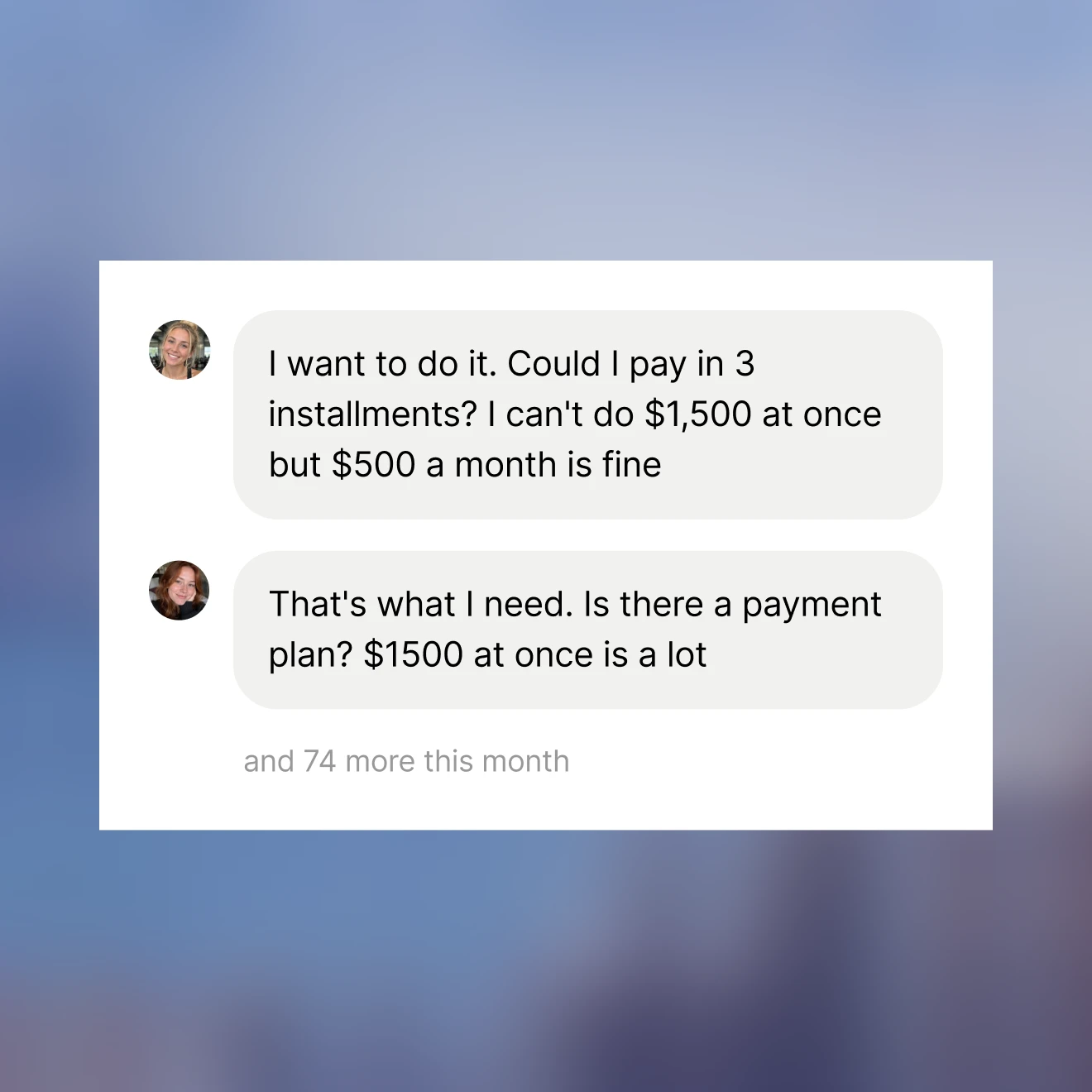
The data was already there. Thousands of conversations say why people buy, hesitate or walk away, in their own words.
 02
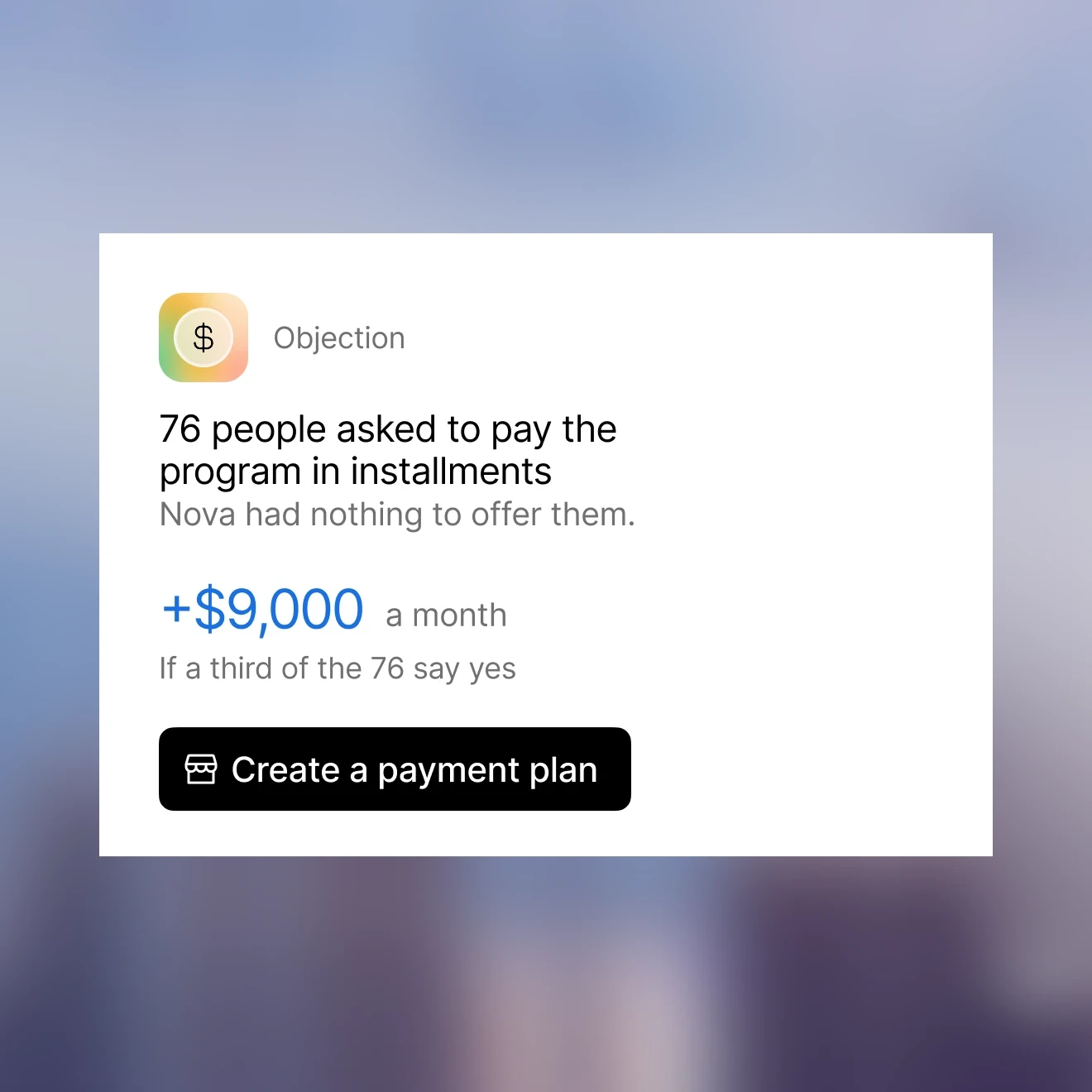
It gives Zenask a job no other agent does: improving the coach's business with what prospects say.
 03
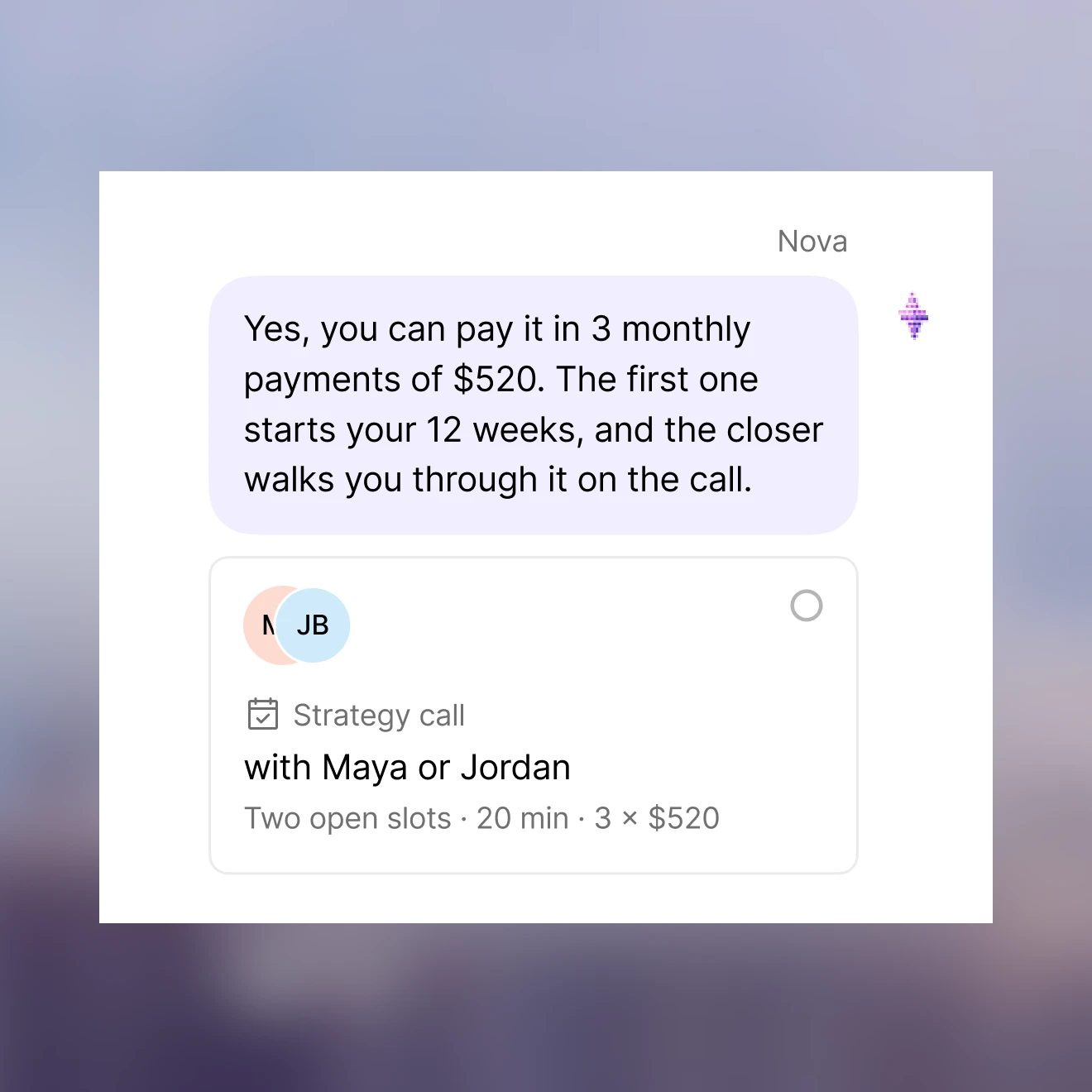
It closes the loop. An insight opens the change it suggests, already filled in: a payment plan in the Store, an answer in the Playbook.
Solution
A team of agents works the DMs, and the Home tells you what they did and what to change.
I made three changes, each answering part of the problem: agents with a name and a job, so the coach knows who did what; one thread for every channel, so their work is in one place as it happens; and insights that open the change they suggest.
One DM followed through the product: Rebecca asks to pay in three, Nova hands it to the coach, 76 others asked the same, the insight drafts the plan, Nova offers it in the DMs, and the team's results add up.
First key flowThe morning report
Zenask opens on a morning report from the coach's agents. Each coach hires and names their own; in this case study, Nova books calls, Pip sells in the chat and Echo follows up. Every agent says what it did overnight. An agent is a set of choices: what it sells, to whom, on which app, in what voice, with how many follow-ups. Keeping every agent's numbers in view shows the coach which setups pay best.
Each agent's gem moves while it works, and its name shimmers.
Tag Nova, Pip or Echo, and the tools the business runs on, or start from a suggestion.
Second key flowAsk your team
The coach can ask the team anything about the business, like who to call today or why a guide stopped selling. The agent who knows answers in its own colour, shows each step it took, and ends with something to act on: a call brief, a list of leads, a promo.
While it works, the agent shows each step: here, scoring 34 open conversations across three apps before it answers.
A new chat
Each agent says what it is doing right now; start from a suggestion or ask the whole team.
Who answers
Pick one agent, or let Zenask choose who answers.
Nova at work
Each step shows up as Nova takes it, so the coach can follow its work.
The answer
The answer streams in, its newest words in Nova's colour.
The answer, done
The leads Nova found, the card that opens the full list, and what to ask next.
How it got there
Tap "Worked for 4s" to see every step Nova took and the sources it read.
The cards
Every answer ends in something to use: a report, a list of leads, a promo. Each opens beside the chat.
Opened
The list opens beside the chat, and the divider gives either side more room. Each answer keeps its own tab.
The list, on the phone
On the phone, the same list opens as a sheet over the chat, sorted by score.
A call brief, the same way
Asked to prep the closers, Nova writes one brief per call: who the prospect is, what they want, and the angle to take.
Third key flowFrom insight to offer
Insights are what the agents learn from the conversations, like the 76 prospects who asked to pay the program in installments. Each one says what it could earn and opens the change it suggests, already filled in: here a 3-payment plan in the Store, which the agents offer in the DMs as soon as it goes on sale.
From the insight to the plan it drafts in the Store, then the moment it goes on sale.
Fourth key flowHire a new agent
Hiring an agent takes under two minutes. I chose to show the impact of each choice on the agent in real time, so the coach feels they are creating a character: their own employee. That makes it personal, and the product stickier: the coach wants to see their agent perform and its revenue climb in the sidebar. A light touch of gamification.
A job, two offers, Instagram added, a warmer voice with one follow-up, then a name. Juno arrives on its own page in its colour.
Design deep dive
Coaches talk to their agents every day, the way they would brief their team.
Coaches spend the time between sessions on their phone, so I made the agents something you talk to, as you would pitch an idea to a colleague. On the desktop you speak, but the answer comes back written, like any chat: at a desk the coach wants the data, the leads and the figures, to work with. On the phone it becomes a real conversation: the agent answers out loud in its own colour, its words in large captions, as on TikTok.
The coach says "Prep my closers for today's calls" and pauses. The agents read today's bookings and the DMs behind each one, and the answer comes back written, with a brief for every call beside it.
You speak
The coach's words in large captions, the glow rising with the voice.
Nova answers
Nova answers out loud, its words captioned in its colour, then shows the insight it is talking about: a payment plan worth $9,000 a month.
Research
The tools coaches already use each show one part of the work.
I looked at the tools coaches already used: AI setters that answer DMs and book calls, chatbot builders, shared inboxes and sales dashboards. Each did one part. None showed in one place, as it happened, what the agent had said and sold, and none read the conversations for what to change in the offers.
ManyChat
Comment-to-DM and keyword flows that send pre-written replies.
Chatfuel
A chatbot builder for Instagram, Messenger and WhatsApp.
SetSmart
An AI setter that qualifies prospects in the DMs and books calls.
FlowGent
An AI DM setter for coaches that books calls while they coach.
Explorations
Every screen was tried at least three ways before it went in.
Designing with AI agents made trying cheap, so each screen got at least three directions, in light and dark, compared side by side before one went in. The Home, the screen a coach opens every morning, took six rounds.
The Home, round by round.
Round 1 was a chat, then a dashboard: clear, but cold, it could have been any SaaS. Then the agents' cards. Round 6 kept the team report, where the agents say what they did.
Key decisions
Decision 1 · A team of named agents
- Instead of
- one chatbot with a generic avatar,
- I chose
- agents the coach names, each with a role, a colour and a gem, a small animated stone that shows whether it is working, waiting or paused.
- Trade-off
- more brand work. In return, the coach sees at a glance who did what, and the agents read as a team.
A gem in its four states: a glint crosses it at rest, glyphs while it works, an orange ring when it waits on you, grey when you pause it.
Decision 2 · One thread for every channel
- Instead of
- copying each channel's interface,
- I chose
- one Zenask thread for every channel. It notes where each message came from and shows, inline, what the agent did and why, and when it handed the conversation to the coach.
- Trade-off
- less familiar than Instagram's or WhatsApp's own look. In return, there is one place to read, whatever the channel.
Decision 3 · Neutral marks, colour when the coach is needed
- Instead of
- green and orange dots on every row,
- I chose
- grey status marks that fill as a deal moves on, and colour only when something needs the coach. Figures are blue; changes are green or red depending on whether they are good news. The dark theme has its own palette, so the agents keep their colours.
- Trade-off
- fewer colours to scan. In return, a colour on screen always means something to do.
Constraints
A product designed before its data.
There was no real data yet, and only a few weeks.
Instead of
designing for every creator who sells info products,
I chose
one precise persona: a fitness coach who sells her program in her DMs, with closers who take the calls.
- Cost
- when Zenask opened to other niches, even close ones, some screens and flows had to be reworked.
- In return
- a much sharper go-to-market: one audience, in its own words, from the first message to the first call.
Instead of
static mock-ups,
I chose
to design in code with a team of AI agents, so every screen was tried on the real product before it went in.
- Cost
- a finished screen still needs polish by hand, and the agents sometimes get things wrong, so everything has to be checked.
- In return
- I judged flows that really worked, on real code rather than frames, about ten times faster.
314 screens and variants designed with agents, on one canvas. The ones kept went into Figma, to be polished by hand where they needed it.
Results
Zenask reached $10K in monthly recurring revenue.
- $10K
- MRR
- 100%
- of DMs answered in under a minute
- 314
- screens and variants designed with agents, in about five days
Reflection
Talk to more people in the industry before building, not once it's built.
Lesson 1 · Coaches aren't developers.
They don't want to configure a bot; they want agents that feel like their own team. That's why each agent has a name, a voice and a colour, and why hiring one takes two minutes.
Lesson 2 · Design in code.
Prototyping with agents meant I judged streaming, dark mode and motion on the real product.
What came next, and why Zenask stopped
Next, the agents were going to send voice notes in the coach's own cloned voice. We started on it before tools like Mochi offered it; voice notes in the DMs have since become common.
The founders saw that a tool this effective also helped sellers with poor ethics push expensive programs on people who couldn't afford them. That went against their values, so they stopped and moved on to other projects. Pierre then recommended me at BenchBee.
"Théo understood how our business worked and brought ideas that moved it, like our insights feature. With him, quality and the brand were a given, so we could put our time into shipping and getting clients. He gave his design view when I had an idea, then went with the decision, and his way of working let us move fast without the product looking rushed."